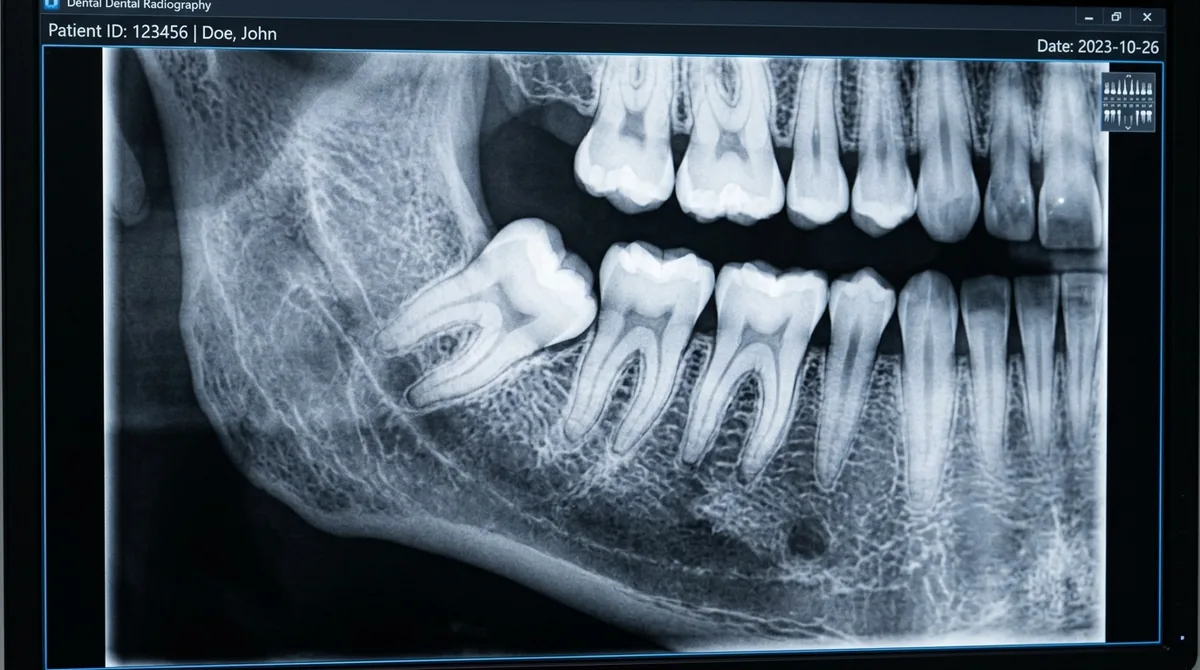
Relieve acute jaw pain, pericoronitis infection, and crowding caused by impacted third molars. Gentle, surgical extraction performed with local anesthesia.
👨⚕️ Clinically reviewed by Dr. Asad Ghafoor & Dr. Azka Zafar•📅 Updated: November 2026•🏥 Canal Road, Rahim Yar Khan
Photo: Surgical extraction and evaluation of impacted wisdom tooth in Rahim Yar Khan. Representative clinical example. Individual anatomical results vary. [Real Premier Dental Care patient before & after photos will be published here with patient consent.]
📋
Quick Clinical Takeaways · Wisdom Tooth Treatment in Rahim Yar Khan
Diagnostic StandardLow-Dose Digital X-Ray
SterilizationClass B Hospital Autoclave
Pain Management100% Gentle Local Care
Location & AccessCanal Rd, near Oxbridge
What Is Wisdom Tooth Treatment & Impaction?
Wisdom teeth (third molars) are the final permanent teeth to erupt, typically emerging between ages 17 and 25. Because modern human jaws frequently lack sufficient arch space, wisdom teeth often become impacted — trapped partially or completely beneath the gum or jawbone at awkward angles (mesioangular, horizontal, vertical, or distoangular).
Partially erupted wisdom teeth create a flap of gum tissue (operculum) that traps food particles and bacteria, causing recurrent acute infections known as pericoronitis, severe jaw pain, cheek swelling, trismus (difficulty opening mouth), and damage to adjacent second molars. At Premier Dental Care in Rahim Yar Khan, Dr. Asad Ghafoor evaluates third molars with panoramic digital radiography and provides gentle surgical disimpaction.
Wisdom Tooth Procedures We Provide
We manage all presentations of wisdom tooth complications with surgical expertise:
Diagnostic Panoramic Radiography
Assessing root anatomy, angulation, and proximity to the inferior alveolar nerve canal.
Pericoronitis Management
Immediate irrigation, debridement, and operculectomy (trimming inflamed gum flap) for acute relief.
Surgical Disimpaction
Gentle surgical elevation and sectioning of horizontally or bony impacted third molars under local anesthesia.
Simple Erupted Third Molar Extraction
Atraumatic removal of fully erupted wisdom teeth causing bite trauma or cheek biting.
Post-Surgical Care & Dissolvable Sutures
Placement of resorbable stitches and detailed post-op pain management guidance.
The Wisdom Tooth Removal Process
1
Step 1: Diagnostic Assessment
Digital X-rays determine tooth position, root curvature, and relationship to neighboring nerve structures.
2
Step 2: Profound Local Anesthesia
The surgical area is thoroughly numbed, ensuring you feel pressure only and zero sharp pain.
3
Step 3: Gentle Tooth Removal
For impacted teeth, a tiny incision is made, the tooth is sectioned into smaller pieces if needed, and gently elevated.
4
Step 4: Hemostasis & Recovery Protocol
The socket is disinfected, dissolvable sutures are placed, and gauze compression controls bleeding.
Who Needs Wisdom Tooth Treatment?
Treatment is indicated when third molars cause pain, infection, or threaten adjacent teeth.
✓Severe pain, throbbing, or swelling at the back of the jaw or cheek.
✓Difficulty opening your mouth (trismus) or pain radiating to the ear or throat.
✓Wisdom teeth pushing against adjacent molars, causing root resorption or tooth decay.
✓Recurrent food impaction and foul odor around partially erupted gum flaps.
Why Choose Premier Dental Care for Wisdom Tooth Care
Experienced Surgical Care
Dr. Asad Ghafoor has extensive surgical experience from major dental hospitals, performing disimpactions efficiently.
Painless Anesthetic Protocols
We ensure profound anesthesia so you experience complete comfort throughout the procedure.
Same-Day Emergency Relief
We accommodate patients in acute wisdom tooth pain promptly to provide rapid infection relief.
Frequently Asked Questions
Do you treat wisdom tooth pain and perform extractions?
Yes. We assess impacted or painful wisdom teeth and perform both simple and surgical extractions, including wisdom teeth and broken or non-restorable teeth.
How long does recovery take after a surgical extraction?
Most patients return to normal routine within 2 to 4 days. Soft diet and gentle rinsing are recommended during initial healing.
What is a dry socket and how is it avoided?
A dry socket occurs if the blood clot dislodges prematurely. It is avoided by not drinking through straws, avoiding spitting forcefully, and not smoking for 72 hours post-surgery.