Save your infected or severely painful tooth from extraction with modern, gentle endodontic therapy. Painless, precise, and completed with rotary instrumentation.
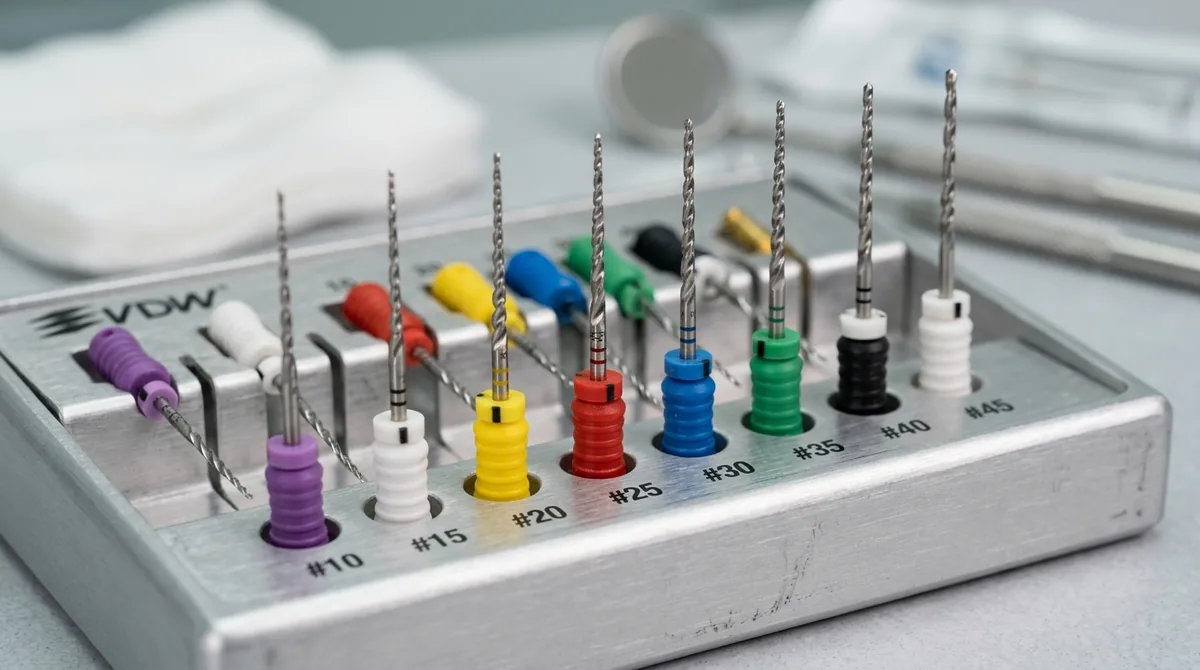
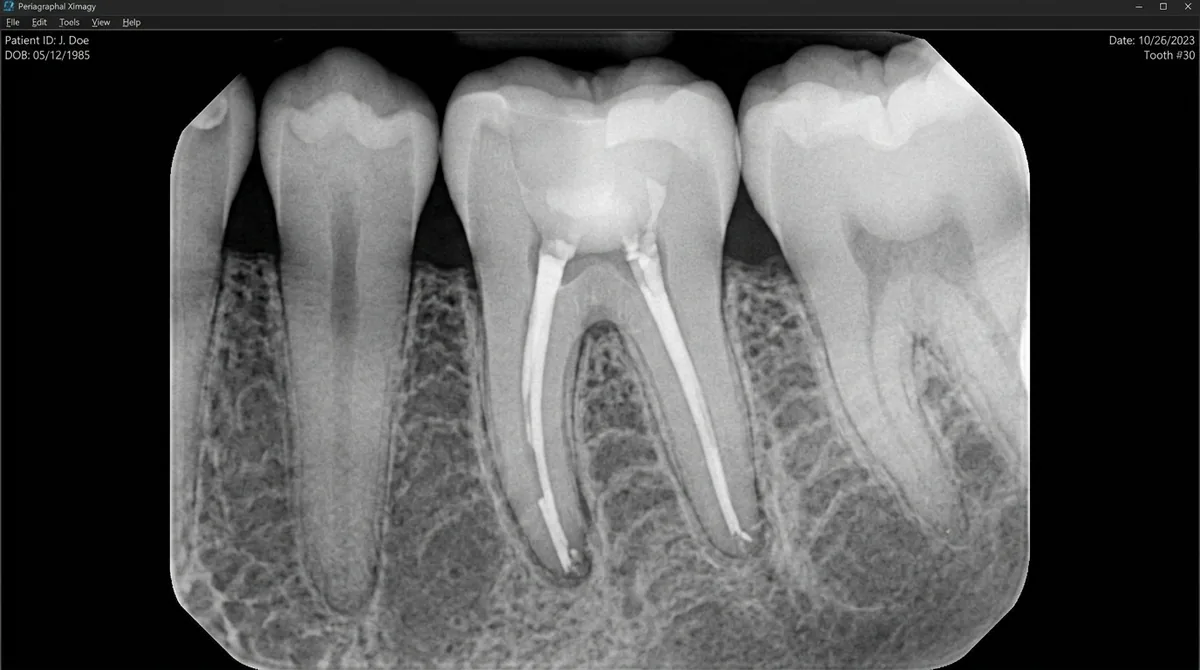
Photo: Painless root canal treatment procedure with modern rotary endodontics in Rahim Yar Khan. Representative clinical example. Individual anatomical results vary. [Real Premier Dental Care patient before & after photos will be published here with patient consent.]
What Is Root Canal Treatment (Endodontics)?
Root canal treatment (endodontic therapy) is a specialized dental procedure designed to eliminate infection from the dental pulp — the innermost chamber of the tooth containing nerves, blood vessels, and connective tissue. When deep decay, repeated dental procedures, or traumatic cracks allow oral bacteria into the pulp, severe inflammation (irreversible pulpitis) or tissue necrosis and apical abscess occur.
Rather than extracting the tooth, root canal therapy cleans, disinfects, and hermetically seals the root canal space. At Premier Dental Care in Rahim Yar Khan, Dr. Asad Ghafoor utilizes apex locators, nickel-titanium rotary files, and biocompatible obturation materials to perform pain-free endodontic therapy that preserves your natural dentition for decades.
Multiple angulation X-rays to assess root curvature, canal morphology, and periapical bone lesions.
Deep Local Anesthesia & Isolation
Profound numbing ensuring a completely pain-free procedure under clean isolation.
Pulpectomy / Biomechanical Canal Shaping
Removal of inflamed pulp tissue and rotary NiTi canal enlargement for optimal disinfectant penetration.
Ultrasonic Irrigation & Disinfection
Copious irrigation with sodium hypochlorite and EDTA activated to destroy canal bacteria.
Warm Gutta-Percha Hermetic Obturation
Three-dimensional root canal filling to prevent reinfection of the periapical tissues.
Post-RCT Coronal Restoration
Post-and-core reinforcement and porcelain/zirconia crown placement to prevent coronal leakage and tooth fracture.
The Root Canal Treatment Procedure
1
Step 1: Diagnosis & Anesthesia
We test tooth vitality, take high-resolution X-rays, and administer gentle local anesthesia to completely numb the tooth.
2
Step 2: Canal Access & Debridement
A micro-access opening is created in the crown to access the pulp chamber and locate all root canal orifices.
3
Step 3: Electronic Apex Location & Rotary Shaping
Canal working length is verified with digital electronic apex locators, followed by rotary disinfection.
4
Step 4: 3D Obturation & Crown Placement
The canal is sealed with gutta-percha and sealer, followed by a protective core and full-coverage crown.
Clinical Photography & Visuals
Procedure Views & Clinical Details
Detailed procedural steps, case comparisons, and clinical views for root canal treatment at Premier Dental Care in Rahim Yar Khan.
Rotary Endodontic Cleaning
Precision rotary instrumentation cleans and sterilizes microscopic root canals to save natural teeth.
Who Needs a Root Canal?
A root canal is recommended when the pulp is irreversibly compromised but the root structure is intact.
✓Severe, spontaneous throbbing toothache, especially when lying down at night.
✓Prolonged tooth sensitivity to hot or cold drinks that lingers for minutes.
✓Swelling, tenderness, or a pimple (gum boil/fistula) on the gum near the tooth root.
✓Teeth with deep cavities extending directly into the nerve chamber.
✓Teeth darkened after a sports injury or blunt facial trauma.
Why Choose Premier Dental Care for Root Canal Treatment
Painless Endodontics
Patients regularly tell us our root canal was no more uncomfortable than having a simple filling placed.
Single-Visit Options Available
Depending on the infection state, many root canals are completed safely in a single efficient visit.
Advanced Rotary Equipment
Flexible nickel-titanium rotary systems navigate curved canals with utmost precision, avoiding file breakage.
Frequently Asked Questions
Is root canal treatment painful?
Modern root canal treatment, done under local anesthesia, is not painful — most patients feel far more relief than pain, since it removes the infection that was causing the toothache in the first place.
How many visits does a root canal take?
Depending on the tooth and severity of infection, root canal treatment can be completed in a single visit or may need two to three visits for more complex cases.
Does a tooth need a crown after a root canal?
Yes, especially on premolars and molars. Root canal-treated teeth lose internal hydration and can fracture easily under chewing forces without a protective crown.
What is the difference between a pulpotomy and pulpectomy?
A pulpotomy removes only the infected coronal pulp chamber (common in children's primary teeth), while a pulpectomy removes all pulp tissue down to the root tips.